
From One Idea to a Song: A Real AI Song Prompt Test
One song idea, two prompt rounds, four generated songs, and the prompt revision that fixed the biggest story drift.
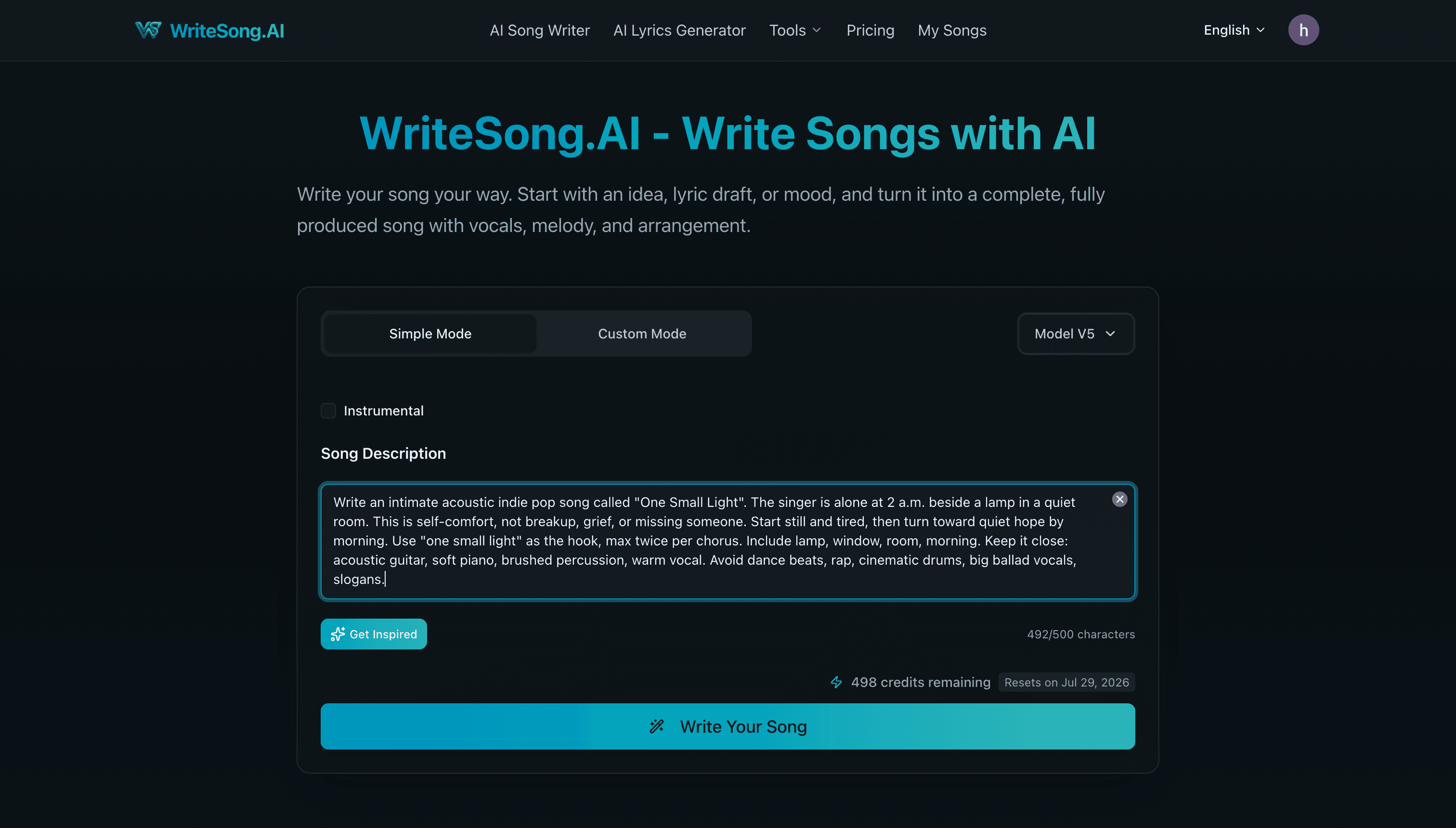
Setup
Simple Mode, Model V5, non-instrumental.
Material
One late-night lamp scene, not finished lyrics.
Output
Two prompt rounds and four public song pages.
Result
Better control, not a perfect final song.
Short Answer
To write a song with AI from one idea, start with a concrete scene, generate a first draft, then inspect the output for story drift, style drift, hook repetition, and public metadata. Do not only regenerate. Revise the prompt around the exact problem you heard or saw.
Test Transparency
This is a small public case study, not a broad benchmark. The value is in showing the prompt, the generated songs, the drift, and the correction.
- Round 1A and Round 1B share the same lyric group, so the lyric problem is round-level.
- Round 2A and Round 2B also share the same lyric group, so the improvement is round-level while vocal and arrangement judgment is candidate-level.
- The revised prompt is not universally better for every genre. It improved this specific brief against the problems observed in Round 1.
Round 1: The Original Prompt
The first prompt gave the AI a concrete scene, a title, a hook, and a list of styles to avoid.
Write an intimate acoustic indie pop song called "One Small Light". The singer is awake at 2 a.m. beside a small lamp, feeling lonely but trying to believe tomorrow can be better. Start quiet and tired, then move toward gentle hope. Use "one small light" as the memorable chorus hook. Include a quiet room, a window, the lamp, and waiting for morning. Avoid generic motivational lyrics, EDM drops, rap verses, cinematic drums, and huge power-ballad vocals.Round 1 Songs
Both candidates were usable drafts, but both shared the same narrative drift.
One Small Light
Largest arrangement, strongest lift, least private of the four.
Public tags: indie pop, acoustic ballad, gentle edm
Open public song pageOne Small Light
More restrained than 1A, but shares the same story drift.
Public tags: indie pop, acoustic ballad, gentle edm
Open public song pageWhat Drifted
The prompt asked for loneliness and self-comfort. Round 1 moved toward missing someone. Short lyric signals, including "Your name in my head" and "losing you", shifted the song toward a relationship-loss frame.
The public display tags also included gentle EDM. The prompt blocked EDM drops, but it did not clearly block all electronic texture or metadata drift. That distinction matters when the song page is public.
The first generation was not bad. It was a useful draft because it showed exactly what the second prompt needed to control.
Round 2: The Revised Prompt
The second prompt kept the same idea but added sharper boundaries around story, production, and hook repetition.
Write an intimate acoustic indie pop song called "One Small Light". The singer is alone at 2 a.m. beside a lamp in a quiet room. This is self-comfort, not breakup, grief, or missing someone. Start still and tired, then turn toward quiet hope by morning. Use "one small light" as the hook, max twice per chorus. Include lamp, window, room, morning. Keep it close: acoustic guitar, soft piano, brushed percussion, warm vocal. Avoid dance beats, rap, cinematic drums, big ballad vocals, slogans.Round 2 Songs
The revised pair stayed closer to the self-comfort brief and removed gentle EDM from the display tags.
One Small Light
Closest match to the revised self-comfort brief.
Public tags: indie pop, acoustic, intimate ballad
Open public song pageOne Small Light
Softer peak, useful if intimacy matters more than chorus lift.
Public tags: indie pop, acoustic, intimate ballad
Open public song page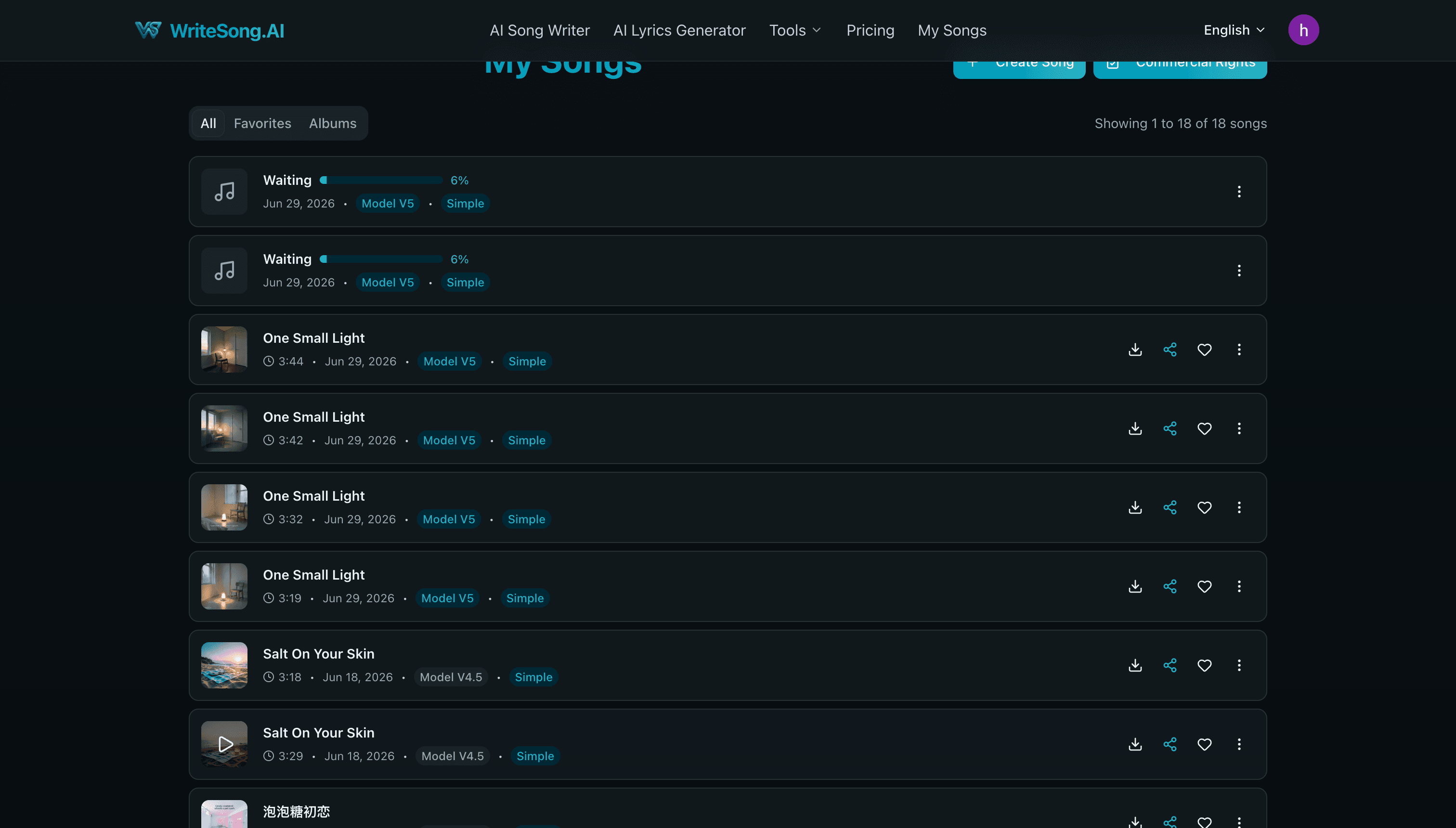
What Changed
The revised prompt did not make the model obey every detail, but it made the output easier to control and evaluate.
Reusable Prompt Template
Use the structure, then rewrite the genre, emotional frame, production line, and avoid list for your own song.
Write a [genre] song called "[title]". The singer is [who/where/when]. This is [emotional frame], not [unwanted story direction]. Start [opening mood], then turn toward [ending mood]. Use "[hook phrase]" as the hook. Include [specific images]. Keep it [production style]. Avoid [unwanted styles or cliches].If you already have lyrics, start with the AI lyrics generator. If you want a broader workflow, read the step-by-step guide to writing a song with AI. For a lower-commitment entry point, try the free AI song writer.
FAQ
What is story drift in an AI song?
Story drift happens when a generated song keeps surface details from the prompt but changes the emotional situation. In this test, Round 1 kept the lamp, room, window, and morning, but shifted from self-comfort into missing someone.
Should I regenerate or rewrite the prompt?
Regenerate when the idea is right but the performance, vocal, or arrangement is not your favorite. Rewrite the prompt when the song changes the story, genre, hook behavior, or public tags.
Is a longer AI song prompt always better?
No. The revised prompt worked because it added sharper boundaries, not because it was simply longer. The most useful details were emotional frame, unwanted story direction, concrete images, and production boundary.
Why check public tags if the song sounds good?
Public tags affect how a song page is described, shared, and understood. In Round 1, the audio did not become an obvious EDM track, but the public display tags still included gentle EDM.
Read next
Continue through the blog cluster
AI Song Prompts That Actually Change the Output
Five practical AI song prompt formulas for writing songs with AI, each paired with fresh before/after evidence from Coffee At Closing Time.
Read articleCan AI Really Write Songs? A Practical Test
A fresh Bus Stop After Midnight test with two generated candidates, dated My Songs evidence, a candidate comparison, and a grounded answer to whether AI can really write songs.
Read articleTreat the first output as the first writing session.
The practical workflow is simple: idea, first song draft, drift analysis, revised prompt, then candidate comparison.
Start your own song prompt