
Not by itself. Hits still come from taste, editing, and a point of view people believe. What AI can do—especially when you steer it—is accelerate drafting, suggest structures, and unblock lines so you spend more time on the decisions that actually move listeners.
They say AI can't write songs. We agree.
AI lacks your heart, your history, and your soul. That's why WriteSong.AI isn't here to replace you—it's here to be the ultimate creative co-pilot: you bring the story; we help you shape it into a finished song.
Co-writing here means you supply the lived truth and taste; WriteSong.AI supplies structure, rhyme pressure, and finishing momentum—without claiming authorship over your story.
Cold data (AI)
Patterns, probabilities, and polished averages—useful scaffolding, but no lived experience behind the line.
Human emotion (you)
Memory, specificity, and the details only you would dare to say—the reason a lyric can hit like truth.
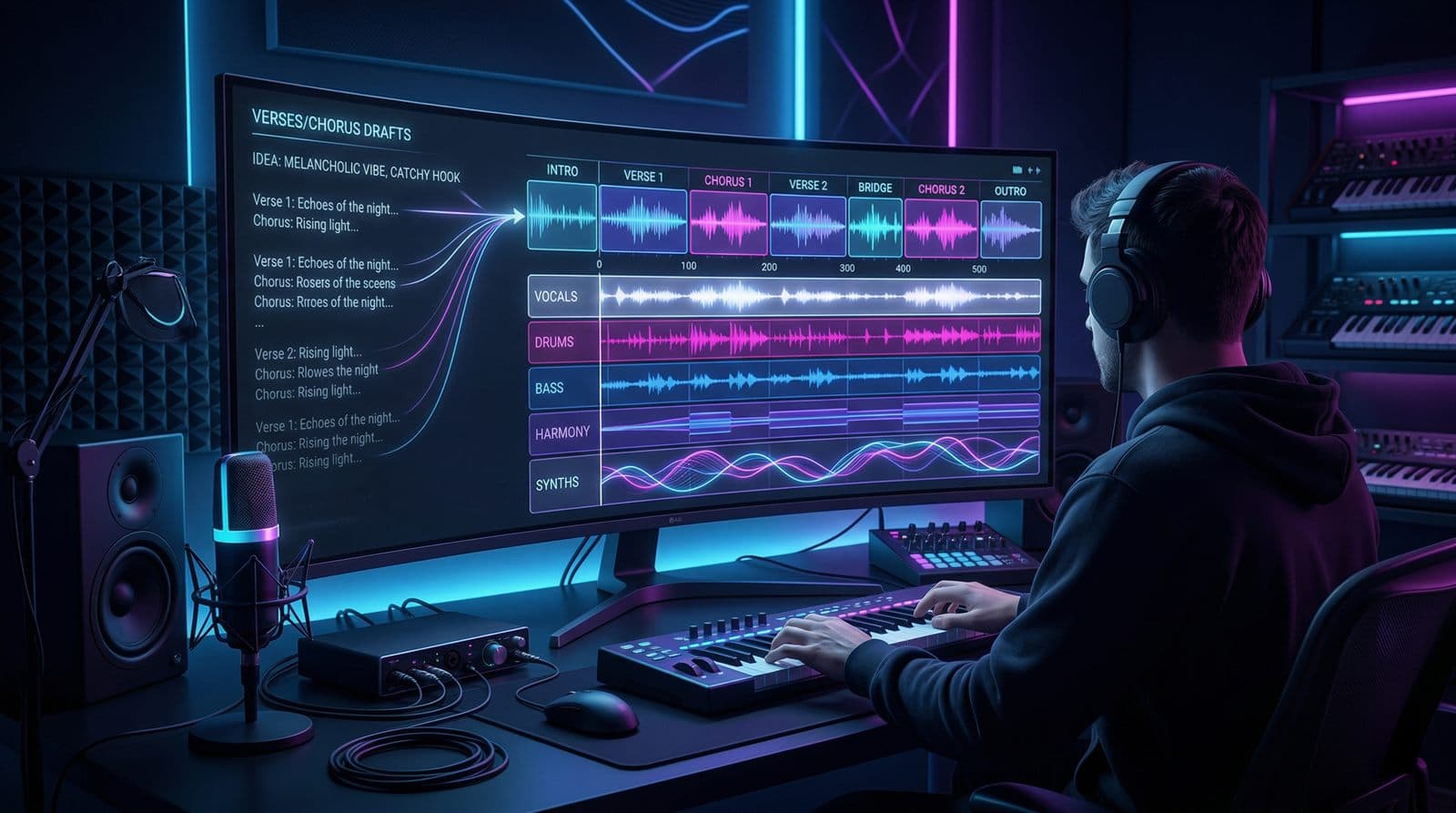
Why most AI music sounds… well, robotic
When prompts stay vague, tool-generated lyrics and tracks often read as emotionally flat: the model extrapolates statistically likely moods instead of anchoring to your specific truth. Songwriters and listeners have surfaced that tension in a public Reddit thread—asking whether fast AI demos complement or crowd human craft, and why much AI output can feel soulless without deliberate human steering. Early academic work is also examining this gap in perceived emotional effectiveness between AI-generated and human-composed music in functional listening contexts. We built WriteSong.AI to narrow that gap—not by pretending algorithms have feelings, but by keeping you as the author while tooling accelerates structure, rhyme options, and arrangement direction.
- •No emotional depth when the prompt is generic and nobody's truth is on the page.
- •Cliché and predictable rhyming when the system optimizes for "likely" instead of "meant".
- •Lack of authentic storytelling when the model can't know what actually happened—unless you put it there.
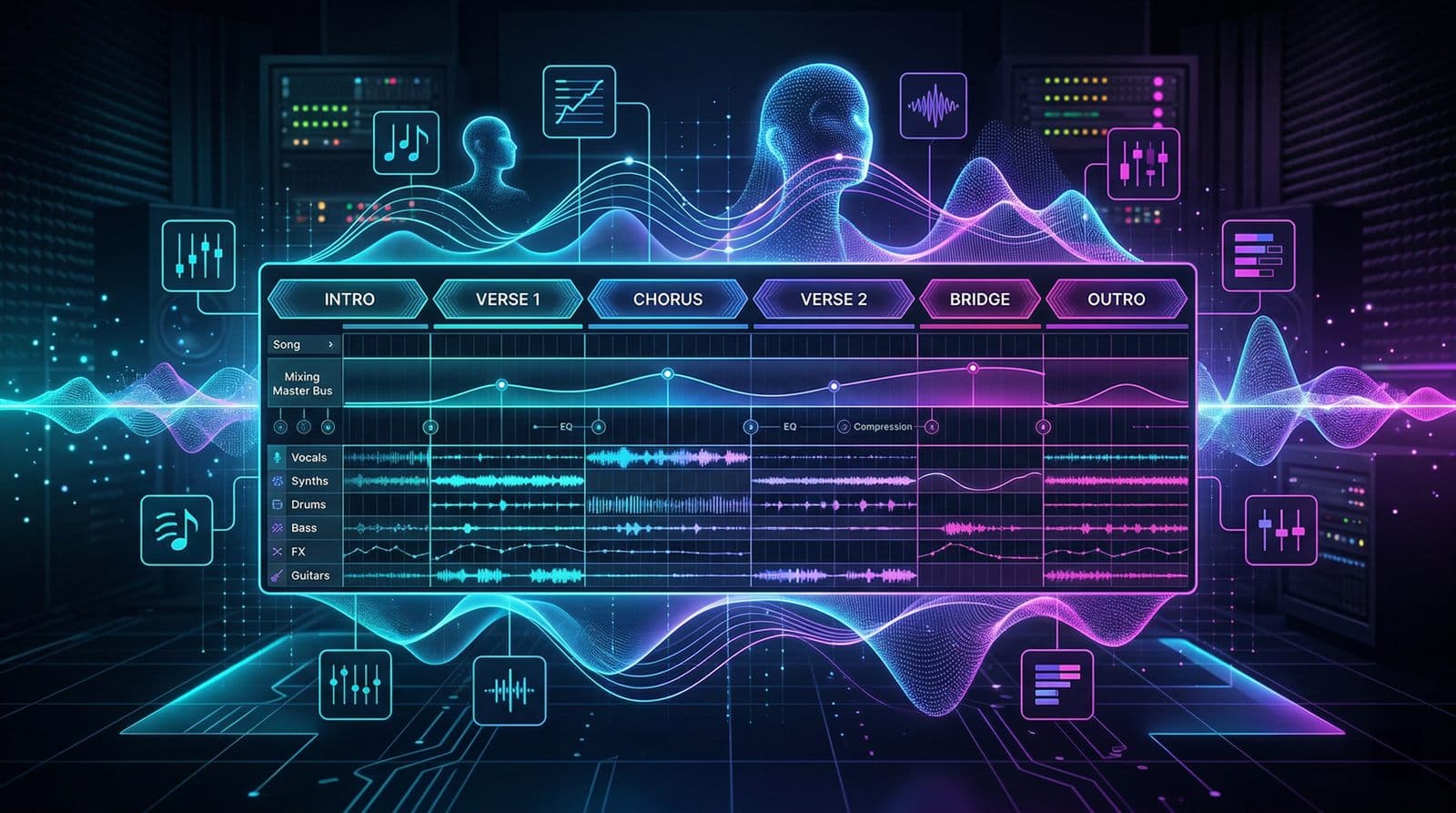
The human–AI symphony: how we work together
Think co-pilot, not autopilot. You stay the author; the system helps you move when momentum stalls.
- •You provide the soul: your specific story, feelings, or a messy draft you refuse to throw away.
- •AI provides the scaffolding: structure ideas and rhyme directions grounded in how songs actually move.
- •You make it real: edit, refine, and stand behind the lines the world will hear as yours.
What that looks like in practice
Three places WriteSong.AI tends to help first—without asking you to give up authorship.
- •Smart rhyme engine: fewer "moon / June" dead ends—explore tighter families of sounds (including slant angles) that still match your tone.
- •Genre-aware architecture: whether you care about rap pocket, country narrative cadence, or pop lift in the chorus, steer with real style language—not vibes-only prompts.
- •Beat writer's block: when one line won't move, generate multiple lyrical directions, then cherry-pick, merge, or rewrite until it sounds like you.
Who this co-pilot workflow is for
For songwriters who distrust "one-click" output
You want help, not a replacement voice. You keep the point of view—and use AI to break logjams, not to outsource your identity.
For lyric-first writers stuck at the same bar
You already know the scene; you need options. Generate directions, then edit ruthlessly until the diction matches your standards.
For producers translating a brief into a demo fast
You need a believable first pass for clients or collaborators—then you'll replace, extend, and stem-split like any real production workflow.
For beginners who still want a human-sounding result
You don't need theory fluency on day one—but you do need honesty in the prompt. The more real detail you add, the less generic the outcome reads.
Real creators, real ownership
Shortened composite scenarios based on common feedback patterns—not verbatim testimonials or paid endorsements.
Elena · Folk songwriter
"AI couldn't write the grief behind my bridge—only I lived it. But having ten rhyme pressures suggested in my vocabulary range got me unstuck without flattening the story."
Marcus · Bedroom producer
"I use the model like a sparring partner. It proposes scaffolding; I rewrite every line that sounds 'too clean.' My final demo still feels like me—just finished faster."
Sam · Indie artist
"I stopped treating 'AI lyrics' as a final draft. I treat it as directions on a map. One good slant-rhyme suggestion saved me an hour of staring at the same couplet."
Priya · First-time releaser
"I cared a lot about ownership and clarity. The workflow made it obvious: my story, my edits, my release. The tool helped me cross the finish line—not ghostwrite my life."
Keep the soul. Ship the song.
Start free, paste what you already have—even if it's messy—and collaborate until the take feels honest. You provide the heart; WriteSong.AI helps you finish.
Start Collaborating for FreeStart from the beat lane
When you want groove and mood before committing to a final topline, Text to Music keeps the session moving.
Open Text to MusicSharpen words first
If lines are still fuzzy, draft and iterate in the AI Lyrics Generator—then bring the stronger draft back here.
Open AI Lyrics GeneratorRefine what already hits
When a version is close, extend it or split stems so you can mix vocals and production with real control.
Refine this trackWant the all-purpose generator?
Use the main AI Song Generator when you want the default full-song workspace across genres and modes.
Open AI Song GeneratorThe truth about AI
You keep your story, your creative choices, and responsibility for what you publish. Treat AI-assisted work like any collaboration—keep drafts, document meaningful edits, follow your plan's usage terms, and read the Terms of Service for binding rules on commercial use.
Because generic prompts produce generic stakes. When you don't put specific scenes, names, tensions, and sensory detail into the input, the model fills the gap with statistically likely language—which reads as hollow even when it's fluent.
WriteSong.AI is built around collaboration: you can generate, but the workflow rewards iteration—edit lyrics, tighten style, regenerate sections, extend, and export—so the end result reflects your intent rather than a single roll of the dice.
AI can mimic tone, but it can't originate your lived truth. Emotion lands when you supply the specifics—then use AI to explore phrasing, rhyme options, and arrangement ideas that support what you're already trying to say.
Write prompts like scenes, not slogans: include who is speaking, what happened, sensory details, and the emotional turn. Then iterate as an editor—keep the lines that feel true, rewrite the ones that sound statistically smooth but emotionally empty.
Yes—if you anchor it to your own themes, phrasing habits, and references, then aggressively revise. Use AI for options and momentum, not identity cloning: your taste and final edits are what make the result yours.